Sceye and Softbank Within The Haps Joint Partnership To Japan
1. This Partnership Is More Than Connectivity
Two organizations with different backgrounds such as a New Mexican-based stratospheric aerospace company and one of Japan’s top telecoms conglomerates to establish a nationwide network of high-altitude platform stations the scope of the project is much bigger than broadband. What’s happening with the Sceye SoftBank partnership represents a true bet on stratospheric technology being a long-lasting, income-generating network of national telecoms -It is not a test project or demonstration of principle, rather the beginning of a full-scale commercial rollout that has a specific timeline and a broader ambition for the nation.
2. SoftBank has a Strategic Motive to Fund Non-Terrestrial Networks
This interest of SoftBank’s in HAPS wasn’t just a blip on the radar. Japan’s geography – thousands of islands, mountains and coastal areas frequently damaged by earthquakes and typhoons that creates constant access gaps that ground infrastructure alone can’t economically close. Satellite connectivity is helpful, but cost and latency remain the main variables for applications that are mass-market. The stratospheric layer which spans 20 kilometres, holding position above specific regions, and delivering low-latency broadband services to conventional devices, resolves many of these issues at once. For SoftBank investing on stratospheric-based platforms is a natural extension of an existing strategy in order to diversify out of terrestrial network dependence.
3. Pre-Commercial services planned for Japan in 2026 Signify Real Momentum
The most important aspect that differentiates the partnership from prior HAPS announcements concerns the target of commercial services that are pre-commercial in Japan at the end of 2026. This isn’t a vague, future announcement, it’s actually a specific operational milestone that has infrastructure, regulatory, and commercial implications attached to it. When they reach precommercial status, the platforms must be able to perform station keep reliably, delivering adequate signal quality, and connecting to SoftBank’s current network architecture. The timing at which this date was been officially announced suggests that both parties have cleared the administrative and technical hurdles for them to consider it a real-world goal instead of aspirational marketing.
4. Sceye Brings Endurance and Payload Capacity That Other Platforms Struggle to Match
Not all HAPS vehicle is suited to being part of a large-scale commercial network. Fixed-wing solar vehicles typically trade payload capacity to gain efficiency at altitude, which limits how much telecommunications or observation equipment they can transport. Sceye’s airship with a lighter weight takes an entirely different approach- buoyancy takes the burden of the vehicle which means that the solar energy can be used to propel, station keeping, and providing power to the onboard equipment instead of simply staying aloft. This architectural approach gives real advantages in payload capability and mission endurance both of which matter tremendously when you’re trying maintain continuous coverage over populated regions.
5. The Platform’s Multi-Mission Capability makes the Economics Work
One of many untapped aspects of the Sceye method is that an individual platform doesn’t have to justify its operational expenses solely through revenue from telecoms. This same vehicle that provides an ultra-high speed broadband network can also host sensors to monitor greenhouse gases, disaster detection, as well as earth observations. For a country like Japan that is at risk of natural hazards and has national commitments to emissions monitoring this multi-payload arrangement is much more straightforward to justify at the government as well as a commercial level. The antennas for telecoms and climate sensor aren’t in competition -They’re sharing a technology that’s already in place.
6. Beamforming and HIBS Technology Create a Signal Commercially Usable
It isn’t as simple as delivering broadband to 20 kilometers away. is not just a matter of placing an antenna downwards. The signal has to be controlled, shaped and manipulated in a way that serves users efficiently across the footprint. Beamforming technology lets the stratospheric antenna to focus signal energy the most needed areas, instead of broadcasting in a uniform manner and wasting capacity over empty areas of ocean or uninhabited terrain. In conjunction with HIBS (High-Altitude IMT Base Station) standards that make the platform compatible existing 4G and 5G device ecosystems, ordinary smartphones are able to connect without special equipment, which is an essential prerequisite for any mass-market deployment.
7. Japan’s Island Geography Is an Ideal Test Case for the World
When stratospheric connections are working at scale in Japan the pattern becomes easily exportable to other nations that has similar coverage issues -and that includes the majority worldwide. Indonesia as well as the Philippines, Canada, Brazil, and numerous Pacific island nations are all facing versions of the same problem: populations distributed across terrain that defeats conventional infrastructure economics. Japan’s combination of technical sophistication and capacity for regulation, along with the need for geographic connectivity makes it an ideal potential test site for an all-encompassing network built on stratospheric platforms. How SoftBank and Sceye demonstrate here will guide deployments elsewhere over the next few years.
8. This New Mexico Connection Matters More Than It Appear
Sceye operating from New Mexico isn’t incidental. The state has high-altitude testing conditions, a well-established airspace facilities, and an airspace that is suitable for long-term flight testing that stratospheric vehicle development requires. Sceye is among the more serious aerospace companies situated in New Mexico, Sceye has developed their development program within the context of genuine engineering iteration and not just press release cycles. The gap between announcing a HAPS platform and actually being able to keep it for weeks at a time is enormous, as is the New Mexico base reflects a company which has been putting in the mundane work to fill that gap.
9. Founder Vision The Partnership’s Vision has been shaped by its founder. Long-Term Strategy
Mikkel Vestergaard’s previous work with a focus on applying technology to environmental and humanitarian challenges — has visibly affected what Sceye strives to create and the reason. The partnership with SoftBank isn’t only a business telecoms company. Sceye’s focus for disaster protection, real-time monitoring and connectivity in areas with low service will reflect the underlying philosophy that the stratospheric network should be used for broadly-based social objectives alongside commercial ones. This perspective has likely led to Sceye a more compelling partner for a company such as SoftBank, which is in a strict regulatory as well as a public one where corporate mission is a significant factor.
10. 2026 Will be the Year in which 2026, the Year that Stratospheric Tier either proves itself or Resets Expectations
The HAPS sector has been promising commercial deployment for a longer time than many people would like to believe. What is unique about it so important to have the Sceye and SoftBank timeline so significant is that it assigns the country of origin, a specific operator, and also a certain milestone in service to a particular year. If the precommercial services offered in Japan launch in time and function as planned 2026 is as the time when connectivity across the stratosphere shifted from a promising technology to an operational infrastructure. If it falls short, the industry will be forced to ask more challenging questions regarding whether the challenges in engineering are as solved by recent announcements. In any case, the alliance has drawn a line in the sky that is worth keeping an eye on. Follow the top rated Monitor Oil Pollution for website recommendations including sceye haps payload capacity, natural resource management, sceye haps status 2025, Sceye endurance, sceye haps airship payload capacity, Beamforming in telecommunications, sceye new mexico, Sceye Founder, sceye haps airship payload capacity, Stratospheric infrastructure and more.
Sceye’s Solar-Powered Airships Bring 5g To Remote Regions
1. The Connectivity Gap is an Infrastructure Economics problem first.
Around 2.6 billion people lack an internet connection that is meaningful, and the reason is almost never not a shortage of technology. It’s due to a lack in financial justification to install that technology in areas where the population density is too low or the terrain is too difficult or the stability of the political system is too uncertain to justify the traditional return on infrastructure investment. Installing mobile towers across mountainous archipelagos and deserted interior areas, or sparsely populated island chains are expensive in comparison to forecasts of revenue that don’t support the idea. This is the reason why the connectivity gap continues despite decades of effort and genuine goodwill — the reason isn’t lack of awareness or desire but the economics for terrestrial rollout in areas which don’t fit the standard infrastructure model.
2. Solar-powered aircrafts redefine the deployment Economy
A stratospheric spaceship operating as an antenna for cell phones in the sky can alter the pricing structure of distant connectivity in ways that affect on a daily basis. A single platform that is 20 kilometers altitude is able to cover a footprint below ground that would require dozens of terrestrial towers, sans the infrastructure for civil engineering or land acquisition, the power infrastructure, and constant maintenance that ground-based deployments require. Solar power eliminates fuel logistics from the equation entirely — the platform generates its own power through sunlight, stores it in high-density batteries for use over the night, and is able to continue its mission with no transport chains reaching into remote terrain. For areas where the obstacle connecting is the price and complexity of physical infrastructure it is a completely different idea.
3. The 5G Compatibility question is more important than it sounds.
Satellite-based broadband is only practical commercially in connection with devices that people actually own. Early satellite internet systems required advanced terminals that were expensive big, heavy, and ineffective for mass-market use. The evolution of HIBS technology that is High-Altitude Intermediation Base Station standards has changed this by making stratospheric devices compatible with the same protocols for 4G and 5G which standard smartphones have already adopted. A Sceye airship acting as a stratospheric telecom antenna can, in principle provide mobile phones with normal connectivity without any additional hardware on the end of the user. The fact that it is compatible with existing devices is what differentiates between a connectivity solution which reaches everyone who is in the reach area, and one which only serves those who can pay for specialist equipment.
4. Beamforming Transforms a Large Footprint into an effective targeted coverage
The area of coverage that is raw for the stratospheric platform can be large but the raw coverage and actual capacity are two distinct things. Broadcasting signals uniformly across a footprint of 300 kilometers will waste the majority of spectrum on uninhabited terrain, open water and areas that have no active users. Beamforming technology permits the stratospheric telecom antenna concentrate signal energy dynamically toward where demand actually exists -that is, a fishing town on one coast and an agricultural zone in another, or a community with a major disaster happening in a third. This intelligent management of signals enhances the efficiency of spectral refraction, which translates directly into the capacity that is available to users rather than the theoretical maximum coverage area that the platform is able to illuminate, with a single broadcast.
5G backhaul services benefit of the same methodologydirected high-capacity links towards ground infrastructure points that need them rather than spraying capacity across an empty landscape.
5. Sceye’s Airship Design Maximises the Payload For Telecoms Hardware
The telecommunications payload aboard an soaring platform — antenna arrays signal processing systems, beamforming equipment power management systems, and beamforming hardwarecan be considered to have weight and volume. A vehicle that is spending the bulk of its structural and energy budget on airborne travel is not able to afford useful telecoms equipment. Sceye’s lighter-than-air design addresses this issue directly. Buoyancy makes the car move with the need for continuous energy to lift, which means that available the power and structure capacity to support a telecoms network large enough to provide commercially valuable capacity rather than a weak signal spread across an immense area. The airship’s design isn’t merely incidental to the connectivity missionis what makes carrying a serious telecoms payload along with other mission equipment feasible.
6. The Diurnal Cycle governs whether the Service is Intermittent or Continuous.
Connectivity service that functions at all times of daylight and turns dark at night isn’t connected service- it’s an experimental service. For Sceye’s solar-powered airships to provide the continuous security that communities in remote areas, disaster personnel as well as commercial operators rely on, it must solve the energy equation for overnight operation quickly and repeatedly. The diurnal energy cycle — producing enough solar energy during daylight to power all systems and recharge batteries to remain operational until next sunrise the governing engineering constraint. Modern advances in lithium-sulfur battery density, approaching 425 Wh/kg, as well as improving solar cell efficiency in stratospheric aircrafts is what completes this loop. Without both longevity and consistency, they’re mostly theoretical, rather than actually operating.
7. Remote Connectivity Causes Additional Social and Economic Impacts
The reasoning behind connecting remote areas isn’t entirely humanitarian in the broad sense. Connectivity can facilitate telemedicine which lowers the cost of healthcare in areas without hospitals nearby. It enables distance education that doesn’t require schools to be built in every scattered community. It offers financial services that can replace cash-dependent economies by the efficacy the digital transactions. It allows early warning systems of nature-related disasters, to connect with the people who are most susceptible to their effects. The effects of each one are compounded over time as communities acquire digital literacy and their economies adapt to reliable connectivity. The global rollout of broadband with coverage for remote regions isn’t just about providing a luxurious service but rather delivering infrastructure that is affecting downstream areas like health, education, safety and economic participation all at once.
8. Japan’s HAPS Network Shows What a National-Scale Deployment Looks Like
The SoftBank alliance with Sceye targeted at the commercialization of HAPS service in Japan in 2026 is important partly due to its scope. A national network requires multiple platforms offering continuous and interconnected coverage across a region whose geography is comprised of thousands of islands, mountains interior, long coastlinesprecisely the kind of coverage issues that stratospheric connectivity has been designed to overcome. Japan also offers a sophisticated technological and legal environment where the operational challenges of managing stratospheric networks at a national scale are expected to be confronted and resolved in a way that will provide lessons to every subsequent deployment elsewhere. What’s working in Japan will inform what works over Indonesia or the Philippines, Canada, and every other nation that has similar geographical and coverage goals.
9. The Founder’s Perspective Shapes How the Connectivity Mission is Framed
Mikkel Vestergaard’s fundamental philosophies at Sceye takes connectivity to be not a product for commercial use that has the ability for remote areas but as a technology with a social obligation attached to it. This frame of mind determines which scenarios of deployment Sceye prioritizes, which partnerships it pursues and the way it communicates the purpose of its platforms before regulators, investors and potential operators. The emphasis placed on remote areas or communities that are not served and resilient connectivity to disasters reflects the view of the stratospheric layer constructed should be used to benefit those less served by the infrastructure. This is not an extra-charitable option, rather as a key requirement of design. Sustainable innovation in aerospace, within Sceye’s context, means creating an item that addresses the actual gaps rather than enhancing service for populations already well-served.
10. The Stratospheric Connectivity Layer is Beginning to Look Like a Natural Event
For years, HAPS connectivity existed primarily in the form of a concept that was a source of investment as well as generating demonstration flights. However, it was not producing commercial services. The combination of mature battery chemistry, improving battery efficiency and solar panel performance, HIBS the standardisation process that leads to device connectivity, and a number of committed commercial partnerships has shifted the horizon. Sceye’s solar-powered airships are the convergence of these enabling technologies at a moment when the demand side – remote connectivity catastrophe resilience, the 5G extension has never been better defined. The stratospheric boundary between terrestrial satellites and orbital networks does not appear to be filling in on the outside. It is being created deliberately, with precise objectives for coverage, specific technical specifications, and even specific commercial timelines that are attached to it. View the most popular Cell tower in the sky for more recommendations including Mikkel Vestergaard, softbank sceye partnership haps, Sceye Wireless connectivity, sceye haps airship status 2025 2026 softbank, sceye softbank partnership, softbank sceye haps japan 2026, Stratosphere vs Satellite, Sceye Wireless connectivity, sceye careers, Sceye stratospheric platforms and more.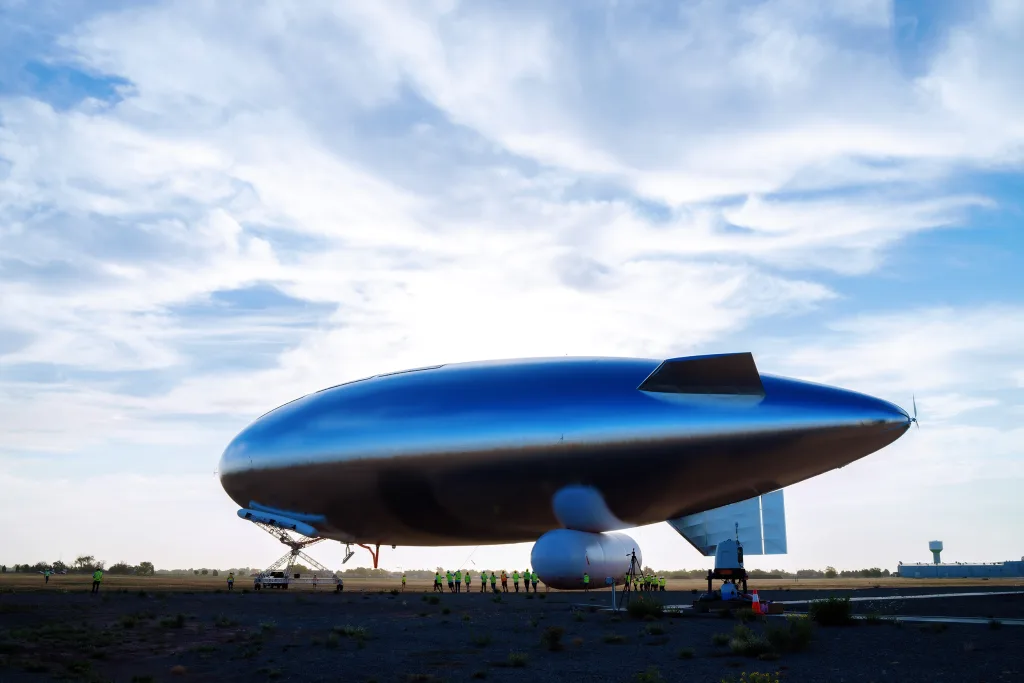
20 GREAT PIECES OF ADVICE FOR PICKING THE SCEYE PLATFORM
